2026-10-23 ·
Step by Step Process for Safe Spray Foam Removal in Attics
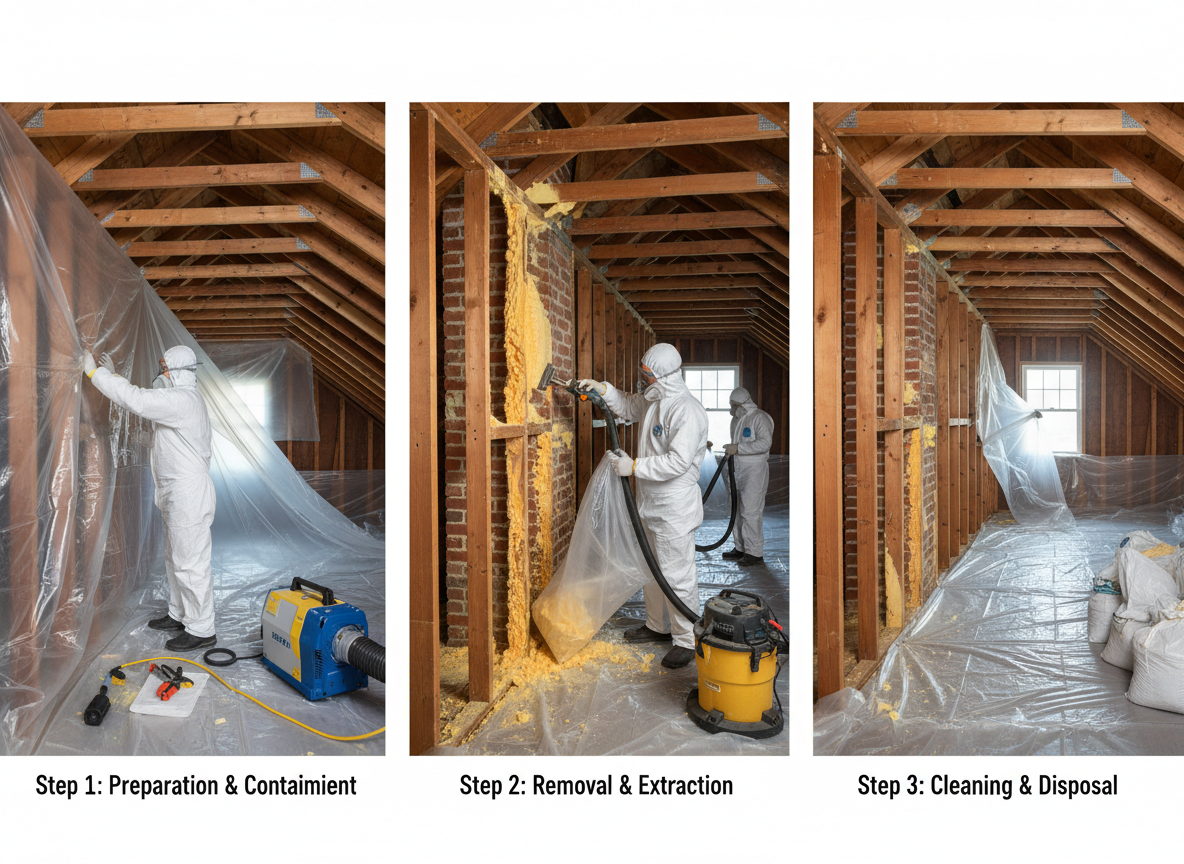
Safe spray foam removal in attics follows a defined sequence that starts with a full inspection and ends with verified clearance. Crews working from 31a Market Pl, Boston PE21 6EH typically complete the core removal phase in one to three days depending on attic size and foam thickness. The process protects joists, wiring and ventilation paths common in Lincolnshire properties while minimising dust migration into living spaces below.
Initial Assessment and Documentation
Every attic spray foam removal project begins with a room-by-room walk-through and photographic record. Technicians measure foam depth at multiple points, note rafter spacing and check for hidden electrical or plumbing runs that older Boston homes often contain. They also examine ventilation openings and any existing insulation layers that must remain in place. This assessment identifies whether open-cell or closed-cell foam is present and flags areas where the foam has bridged to the roof deck. Properties in Fishtoft and Wyberton frequently show additional complications from previous loft conversions, so the survey includes checks for altered load paths. The findings determine which removal method will be used and whether extra containment will be required around chimney stacks or party walls.
Site Preparation and Containment
Once the scope is confirmed, the work area is isolated from the rest of the house. Heavy-duty poly sheeting is taped at every ceiling penetration and stairwell opening, while negative-air machines maintain airflow out of the attic. All personal items are removed from the rooms directly below, and HVAC registers are sealed. In Boston’s terraced streets, crews often route extraction hoses through upper windows to avoid disturbing neighbours. Protective flooring is laid along access routes, and a dedicated decontamination zone is set up at the loft hatch. These steps prevent insulation particles from settling into carpets or furniture, a common complaint when removal is attempted without proper barriers.
Removal Techniques and Tools
Technicians begin at the eaves and work toward the ridge, scoring the foam into manageable sections with oscillating blades before prying it free from the rafters. Where foam adheres tightly to historic timber, dry ice blasting is employed to loosen bonds without gouging the wood; this method is detailed further in our dry ice blasting spray foam removal service. Vacuum extraction follows each pass to capture loose material before it can settle. Wiring and pipework are protected with temporary covers, and any sections of foam that have wicked moisture are cut back an additional 150 mm beyond the visible damp line. Throughout the process, air quality is monitored to keep respirable dust below recommended limits.
Post-Removal Inspection and Cleanup
After the bulk of the foam is removed, the attic is vacuumed a second time with HEPA-filtered equipment and all surfaces are wiped. Joists and the underside of the roof deck are examined for remaining residue or damage that may need localised repair. In Kirton and Sibsey properties, crews often discover that older felt underlay has been compromised during removal, so a quick check of the roof covering from inside is included. Final clearance testing confirms that no visible foam remains and that ventilation paths are unobstructed. Only then is the containment dismantled and the property returned to the owner.
Follow-Up Considerations for Lincolnshire Homes
Once the attic is clear, homeowners in the Boston area frequently arrange a separate insulation assessment to decide on replacement materials suited to the region’s damp winters. Properties near the coast or in low-lying villages such as Butterwick may also need improved roof ventilation to reduce future condensation risk. Full records of the removal, including before-and-after photos, are supplied for mortgage or insurance purposes. Readers planning work on older buildings can find additional guidance in our article on local considerations when removing spray foam from historic Boston buildings. Those preparing for winter scheduling will benefit from reviewing preparing your home for spray foam removal during Lincolnshire winters.