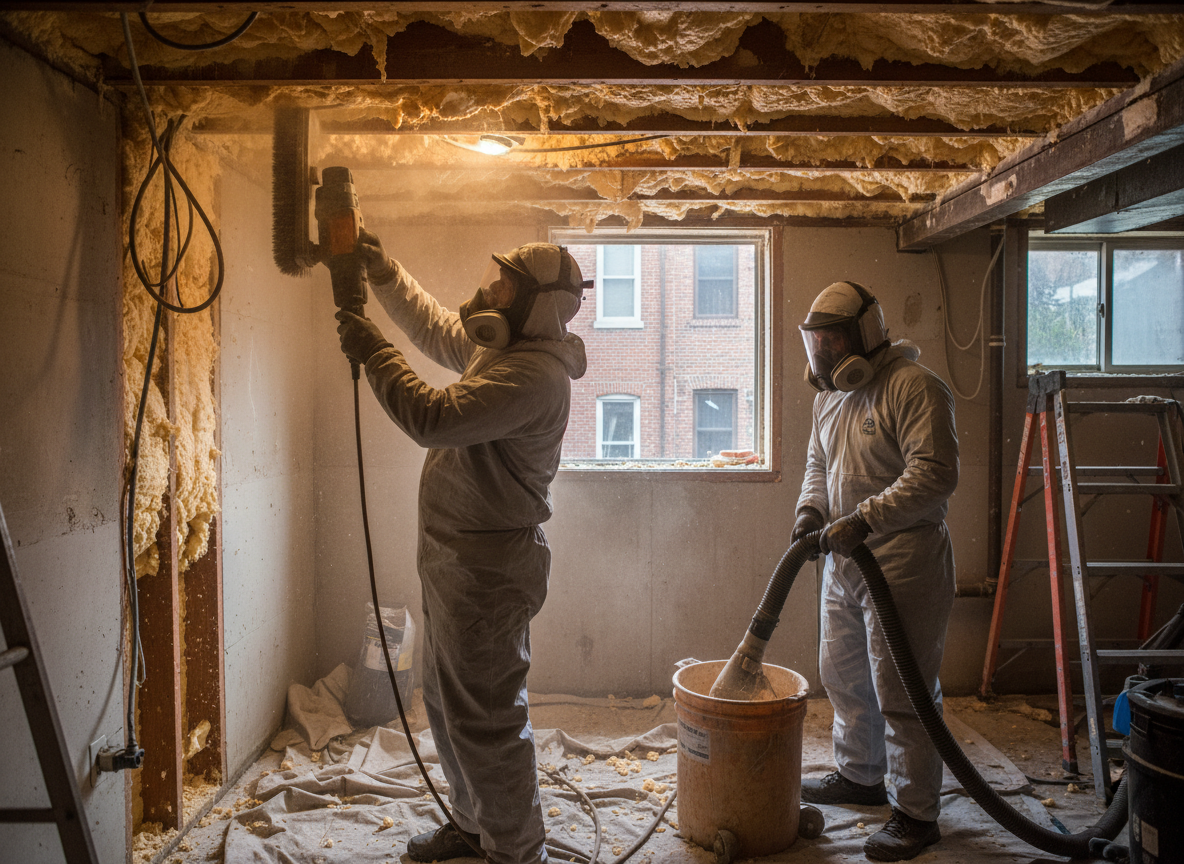
Boston's older terraced and semi-detached housing stock, much of it built before the 1950s, often received spray foam insulation in lofts and under floors during later energy upgrades. The area's frequent rainfall and high water table mean that once foam is applied directly to timber or masonry, trapped moisture cannot escape, leading to hidden rot in joists and wall plates. Removal requires careful sectioning of the material to avoid damaging original lath and plaster ceilings or exposing asbestos-containing artex common in properties near the market square and along Wide Bargate.
Work in the Boston area must account for narrow access routes through Victorian terraces and the risk of disturbing insulation that has bonded with electrical cabling or pipework installed decades ago. Technicians typically start by isolating the loft space, then use negative-air machines to contain dust before cutting the foam into manageable blocks. After extraction, surfaces are cleaned and ventilated to allow timber to dry naturally before any new insulation is considered. Properties near the River Witham face extra checks for rising damp that the original foam may have concealed.
Homeowners in Boston often discover the need for removal only after noticing musty smells or higher heating bills once the foam begins to degrade. Local conditions, including cold winters followed by damp springs, accelerate this breakdown in unventilated roof voids. Proper removal restores airflow and prevents further structural damage without relying on chemical solvents that could affect nearby gardens or neighbouring properties.
Technician insight
In Boston, the thing that catches most people out with Spray Foam Removal near me is how older brick terraces along the river hold moisture once the foam is cut away, especially in properties where original eaves have been blocked for decades.
Hidden Rot in a Wide Bargate Terrace
A homeowner in a pre-war terrace near Wide Bargate reported persistent damp smells. Inspection found spray foam bonded to ceiling joists that had trapped condensation from the nearby river. We removed the foam in controlled sections, treated the affected timber, and restored loft ventilation. The property dried out without further structural work.
How it works
- 1
Site Assessment
Inspect loft, underfloor and wall cavities to map foam coverage and identify any timber or wiring issues.
- 2
Containment Setup
Seal the work area with sheeting and negative-air filtration to protect living spaces from dust.
- 3
Foam Extraction
Cut and remove foam in sections, checking for hidden moisture or rot as work progresses.
- 4
Surface Cleaning and Drying
Clean rafters and joists, then improve ventilation so timber can dry before further works.
Pricing
Upfront quotes issued after inspection; cost depends on access difficulty, depth of foam and any timber repairs required.