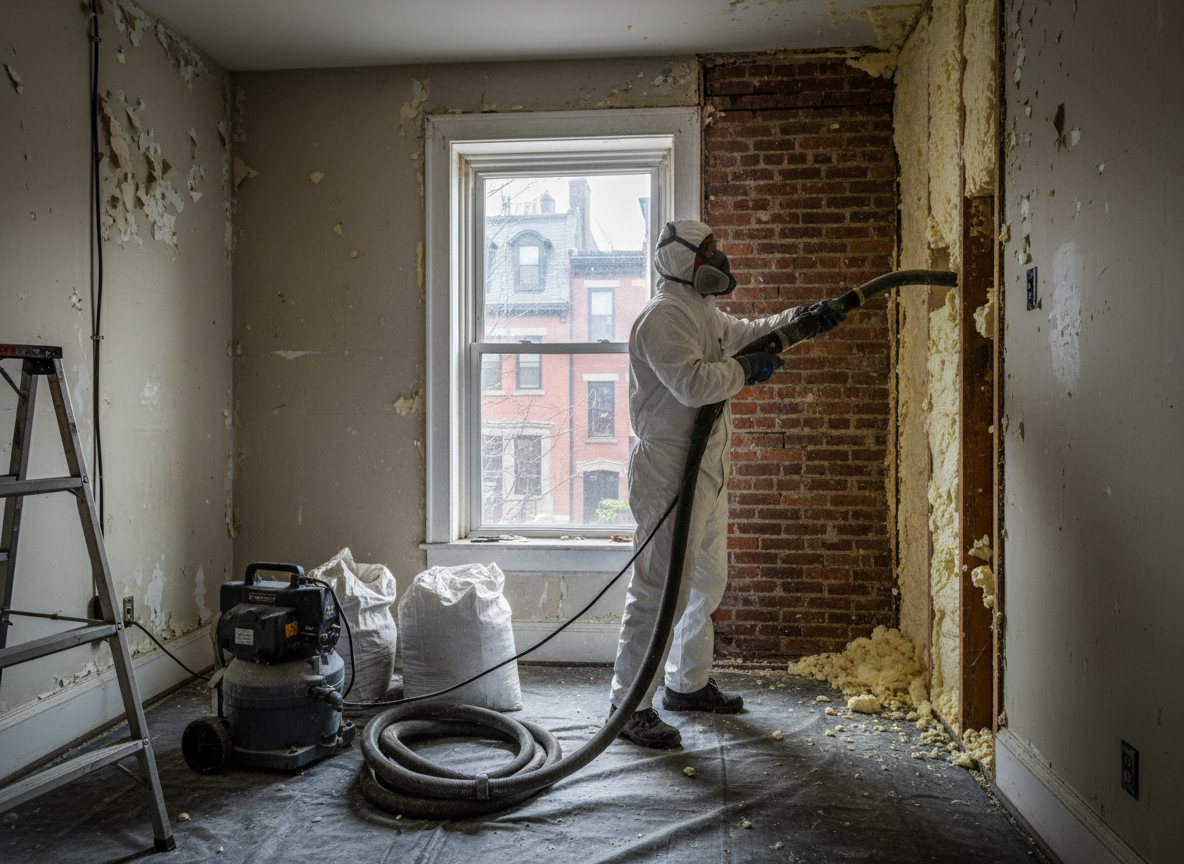
Cavity wall spray foam installed in the 1990s and early 2000s across Boston often traps moisture against the inner leaf of brickwork, especially in Victorian terraces and post-war semis common around the town centre and Skirbeck. Once winter temperatures drop and driving rain hits the east-facing walls, the foam prevents drying and pushes damp into plaster. Removal requires careful drilling patterns that follow the original cavity ties so the brickwork is not loosened further.
Lincolnshire clay soils hold water longer than sandy ground, so properties near the River Witham and Maud Foster Drain frequently show rising damp once foam blocks the cavity. Technicians must work around existing electrical cables and pipework that run through many of these walls, using low-pressure extraction to avoid disturbing the outer brick skin. In narrow access yards behind Market Place shops the equipment has to be carried in by hand.
Local building control now requires any re-insulation after removal to meet current ventilation standards, which means fitting weep holes and air bricks that older Boston homes never had. Homeowners who attempt DIY drilling often hit the foam with high-speed tools and create dust that settles into the remaining cavity, making later cleaning more difficult and expensive.
Technician insight
In Boston, the thing that catches most people out with Cavity wall spray foam removal is how the local clay holds water against the inner brick once the foam is gone. Older terraces around the Market Place often have uneven cavities from 19th-century alterations, so extraction can suddenly expose hidden timber lintels that need protecting before they start to rot.
Cavity Wall Foam Removal in Skirbeck Terrace
Homeowner noticed persistent damp patches on the gable wall after heavy autumn rain. Inspection found spray foam blocking the cavity and trapping moisture from the adjacent drain. We extracted the foam section by section, added weep holes at the base, and left the cavity clear so the brickwork could dry through winter.
How it works
- 1
Site Assessment
Survey the cavity from both inside and outside, checking for existing damp proof course condition and noting any previous insulation attempts in Boston properties.
- 2
Access Preparation
Set up dust containment and mark drill points that follow the original tie pattern while protecting floors and garden areas in tight yards around PE21.
- 3
Foam Extraction
Use low-pressure tooling to remove the foam in sections, clearing debris without disturbing brickwork or services running through the cavity.
- 4
Cavity Cleaning and Ventilation
Vacuum remaining residue, install new weep holes and air bricks, then confirm the cavity can breathe before handover.
Pricing
Cost depends on wall area, depth of foam, and access constraints typical of older Boston terraces; call for a site visit.