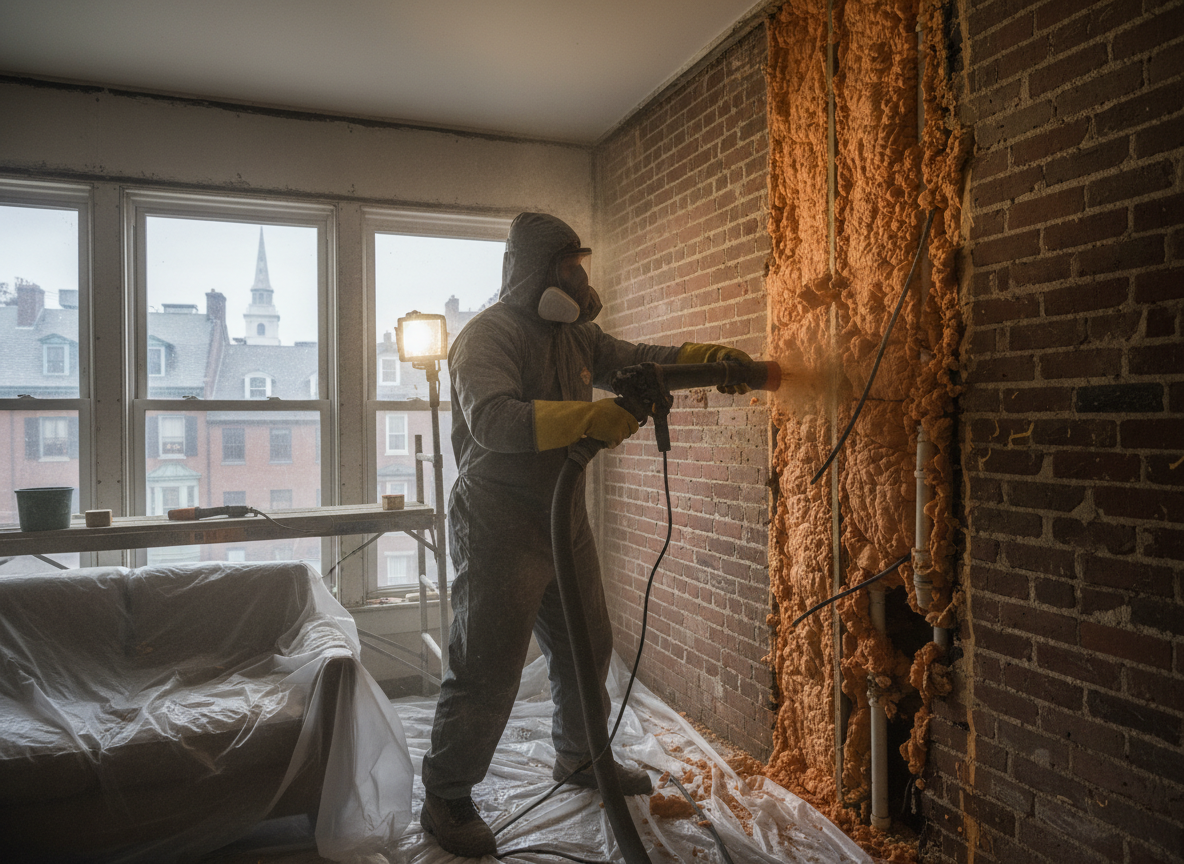
Closed cell spray foam bonds tightly to rafters and joists in Boston lofts, often installed in Victorian terraces around Market Place and along the River Witham. Removal requires careful scoring and mechanical separation to avoid damaging original timber that has already absorbed years of fenland moisture. Homeowners frequently discover the foam has sealed in condensation once it is stripped, leaving battens and plasterboard saturated. Proper extraction includes negative air machines and bagging of debris to stop particles migrating into living spaces below.
Boston's flat terrain and high water table mean many properties experience seasonal damp that weakens foam adhesion over time. When removing the material, technicians must check for hidden rot in ceiling joists, especially in properties near the docks where salt air accelerates corrosion of metal fixings. Edge cases include foam applied over existing insulation in 1970s semis, where layers must be peeled sequentially to prevent ceiling collapse. Local building control may require ventilation upgrades after removal to meet current regulations on roof space airflow.
The process demands protection of electrical cables and pipework that run through many Boston attics, as closed cell foam can conceal junctions that then overheat once covered. Post-removal inspection often reveals inadequate original roof ventilation, a common issue in terraced housing around Wide Bargate. Disposal follows Environment Agency guidelines for construction waste, with material taken to licensed sites rather than general landfill. Work is scheduled around weather windows because sudden rain can enter once the foam barrier is gone.
Technician insight
In Boston, the thing that catches most people out with closed cell spray foam removal is the hidden condensation trapped against rafters once the foam is gone, especially in properties near the Witham where groundwater keeps roof timbers damp for months after extraction.
Loft Foam Removal Near Market Place
Homeowner in a 1930s terrace reported persistent musty smells. Inspection found closed cell foam sealing a poorly ventilated roof space above the kitchen. We removed the foam in sections, dried the joists, and installed additional vents. The loft now meets airflow standards and the odour has gone.
How it works
- 1
Initial Assessment
Inspect loft access, measure foam depth, and identify moisture damage in Boston properties.
- 2
Containment Setup
Install dust barriers and negative air filtration to protect living areas below.
- 3
Foam Extraction
Score, cut and mechanically remove closed cell layers without damaging original timbers.
- 4
Cleanup and Disposal
Bag all debris, vacuum residues, and remove waste to licensed facilities.
- 5
Ventilation Check
Assess roof space airflow and advise on any required improvements.
Pricing
Pricing varies with loft size, foam thickness and access difficulty in older Boston buildings.