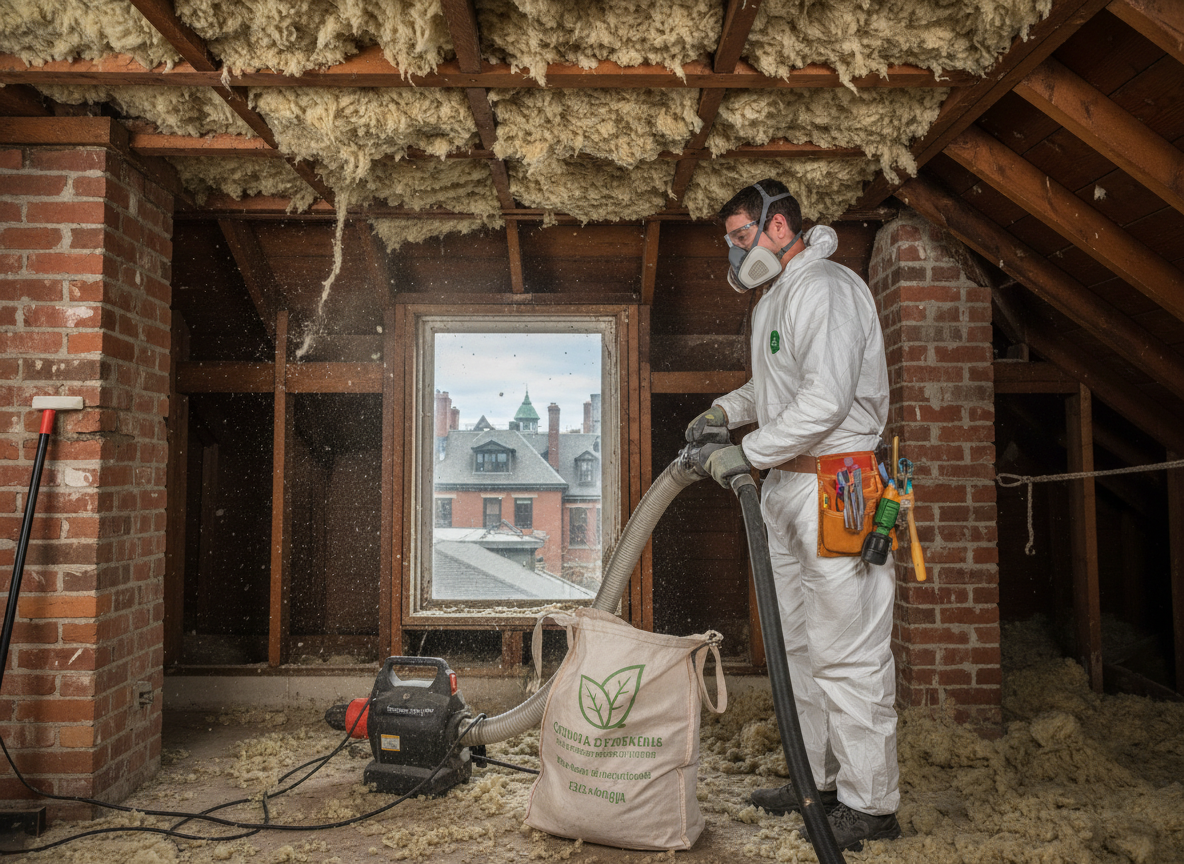
Boston's older housing stock, particularly terraces and semi-detached homes built before 1970 around the town centre and Skirbeck, often contains spray foam applied to roof voids during later energy upgrades. Lincolnshire's frequent damp winters and high water table allow trapped moisture to degrade timber and encourage mould once the foam breaks down. Environmentally friendly removal avoids solvent-heavy stripping agents, instead relying on mechanical separation and water-based release agents that minimise airborne particulates and allow safe disposal through licensed waste streams.
Edge cases arise in properties near the River Witham where poor original ventilation combines with foam that has wicked water from below. Attempting DIY removal here frequently releases fibres into living spaces and leaves residue that later fails building control inspections. Professional crews contain the work area with negative pressure and HEPA filtration, then separate the foam into manageable sections for bagging without disturbing adjacent insulation or electrical runs.
Regulatory notes for the Boston area require that removed material be classified and transported as non-hazardous construction waste when free of certain legacy additives. Homeowners should expect the process to expose any underlying rot or inadequate roof ventilation that must be addressed before new insulation is installed. Crews document these findings with photos so owners can plan subsequent repairs without surprise costs.
Technician insight
In Boston, the thing that catches most people out with environmentally friendly insulation removal is the combination of 1960s timber frames and Lincolnshire's persistent winter damp. Homeowners often assume the foam is the only issue, yet once we start pulling it back around properties near the market place we regularly find hidden rot along the eaves that needs addressing before any new insulation goes in.
Skirbeck Loft Extraction
Owner of a 1960s semi in Skirbeck reported persistent loft odours after heavy rain. Inspection revealed spray foam trapping moisture against rafters. We removed the foam with water-based agents, ventilated the void and bagged all material for licensed disposal. The roof space dried out without further timber damage.
How it works
- 1
Initial Assessment
Inspect the property to map foam depth, access points and any moisture damage in Boston homes.
- 2
Site Containment
Seal the work zone with sheeting and negative pressure to prevent dust migration into living areas.
- 3
Mechanical Removal
Use water-based agents and hand tools to separate foam from joists and rafters without harsh chemicals.
- 4
Waste Segregation and Disposal
Bag material on site and transport to licensed Lincolnshire facilities for environmentally responsible processing.
- 5
Final Ventilation Check
Clear residue and confirm airflow paths are open before handover.
Pricing
Pricing varies with access difficulty, foam thickness and waste volume in older Boston properties.