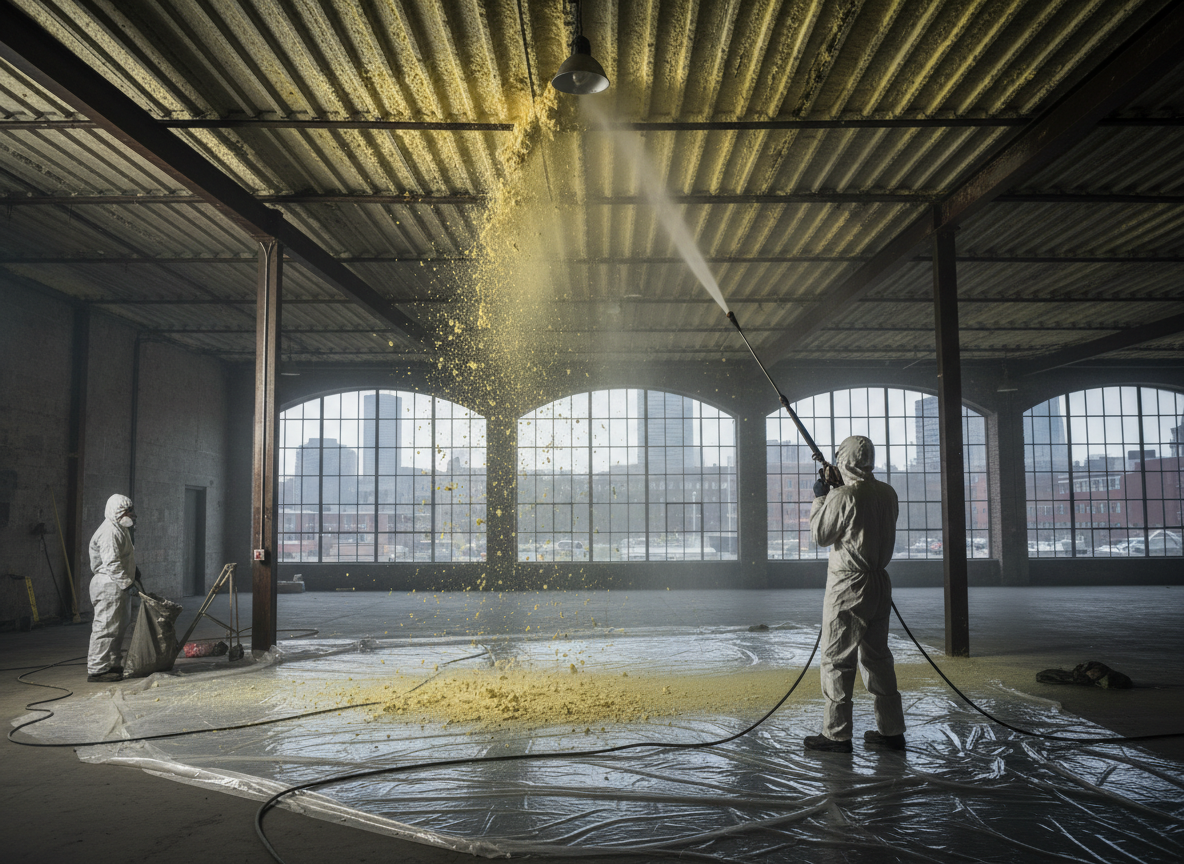
Warehouses in Boston often feature older brick or steel-frame construction from the mid-20th century, where spray foam was applied directly to metal roofs and walls for insulation. Removing it requires careful separation from corroded fixings and attention to the high water table in the fenland, which can leave residual moisture that affects adhesion during any re-insulation. Dust and debris containment is critical inside large open spaces to avoid contaminating stored goods or adjacent units.
Edge cases include foam that has absorbed water near loading bays or where previous flooding from the River Witham has occurred, leading to hidden mould growth behind the material. Proper removal involves sectioning the foam in controlled passes rather than tearing, followed by HEPA vacuuming of the substrate. UK waste regulations require bagging and licensed disposal of polyurethane offcuts, which adds steps not needed on smaller residential jobs.
Seasonal timing matters because winter damp in the Boston area slows drying after removal, while summer heat can make foam more brittle and easier to section cleanly. Crews must check for hidden services in the roof voids common to local industrial stock before starting, as older electrical runs are often embedded near foam layers.
Technician insight
In Boston, the thing that catches most people out with warehouse spray foam removal is the hidden moisture trapped against the brickwork from the fenland water table, which makes foam stick tighter in lower sections and requires extra drying time before any follow-on work.
Riverside warehouse foam extraction
Foam on a steel-framed warehouse near the River Witham had absorbed water after seasonal flooding. Inspection showed mould behind several panels. We sectioned the material, contained the dust, and removed all waste under licensed disposal. The owner could then schedule drying and new cladding without further contamination.
How it works
- 1
Site Assessment
Walk the warehouse to map foam locations, check for moisture damage from local fenland conditions, and identify access points.
- 2
Containment Setup
Install dust barriers and negative air machines to keep particles contained within the work zone.
- 3
Foam Extraction
Cut and peel foam in sections, separating it from metal or brick substrates without damaging the structure.
- 4
Substrate Cleaning
HEPA vacuum and wipe surfaces, then bag all waste for licensed removal.
- 5
Final Walkthrough
Inspect for remaining material and confirm the space meets clearance standards before handover.
Pricing
Costs depend on warehouse size, foam depth, and access difficulty; upfront quotes provided after inspection.